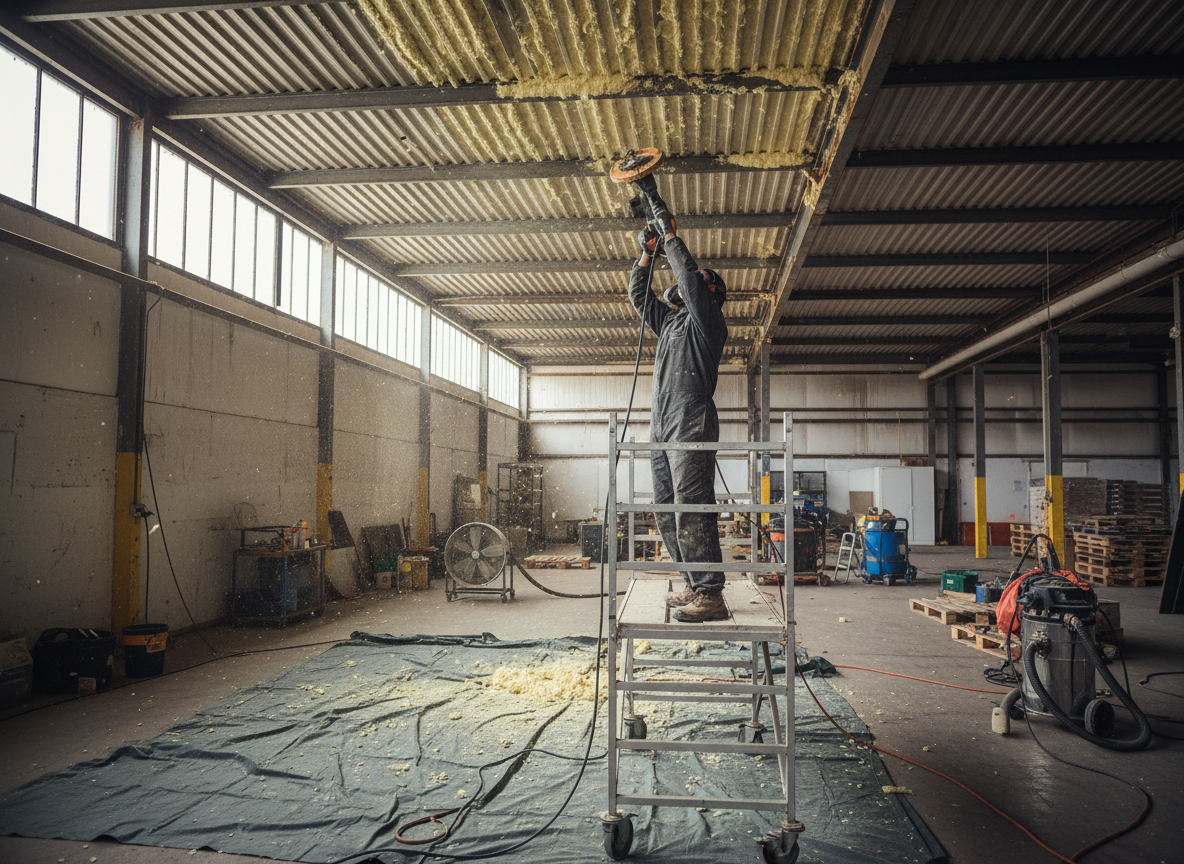
Warehouses in the Cheltenham area often feature steel-framed structures with metal cladding or older brick elevations dating back to the mid-20th century. Spray foam applied to these surfaces bonds aggressively to corrugated iron and concrete soffits, especially where condensation cycles have occurred over decades. Removal requires careful separation to avoid damaging purlins or introducing moisture into the building envelope during Gloucestershire's frequent wet spells.
Edge cases include foam that has been applied over existing insulation layers or electrical conduit runs common in local distribution units. In these situations, mechanical scraping alone risks short circuits or hidden voids that later allow water ingress. Containment sheeting must account for the high volume spaces and roller-shutter doors typical of Cheltenham trading estates to prevent dust migration into adjacent occupied areas.
Disposal follows Environment Agency rules for polyurethane waste, with material double-bagged and taken to licensed Gloucestershire facilities. Attempting on-site burning or improper landfill disposal creates both legal exposure and fire hazards from residual isocyanates. Proper sequencing also includes post-removal inspection of roof fixings, as older Cheltenham warehouses can have corroded bolts that become visible only after foam is stripped.
Technician insight
In Cheltenham, the thing that catches most people out with Warehouse spray Foam removal is the way older Gloucestershire industrial units hold moisture in the roof void after winter rains; the foam stays soft underneath and tears in sheets instead of coming away cleanly, forcing slower hand work around purlins.
Distribution Unit Near Runnings Road
Foam on the underside of a metal-clad warehouse roof had begun to sag and drop dust onto stored goods. Inspection showed it had been sprayed over original bitumen coating and electrical trunking. We sectioned the work, used heated blades to release the foam without disturbing cables, contained the debris, and cleared the space within two days while the unit stayed operational.
How it works
- 1
Site Assessment
Walk the warehouse interior and roof void to map foam thickness, substrate type, and any hidden services or structural concerns.
- 2
Containment Setup
Install heavy-duty poly sheeting and negative-air units scaled to the high ceilings and large door openings found in Cheltenham industrial units.
- 3
Mechanical Removal
Use heated scrapers and rotary tools to release foam without gouging metal or concrete, working in sections to maintain control of debris.
- 4
Waste Handling and Final Clean
Bag and remove all material for licensed disposal, then vacuum and wipe surfaces to leave the space ready for new works or inspection.
Pricing
Cost depends on warehouse floor area, foam depth, access height and whether disposal tonnage is high.