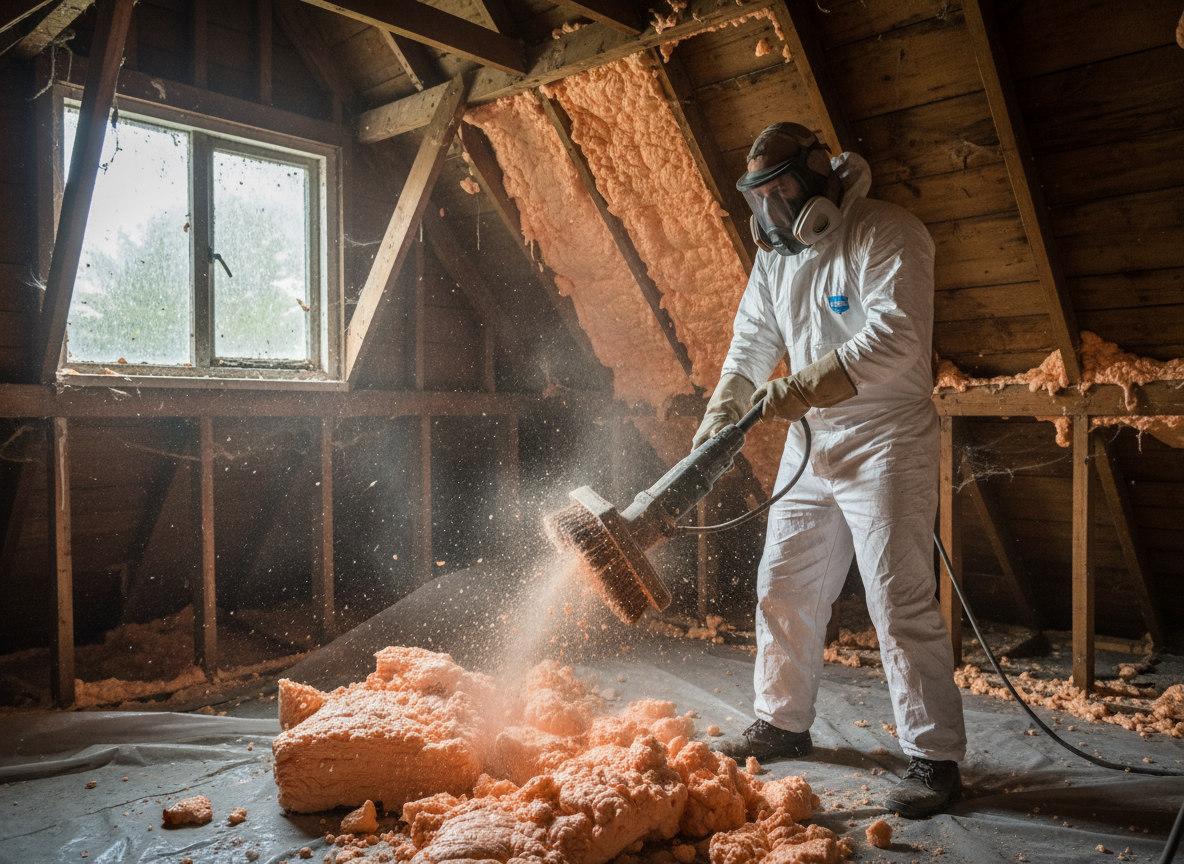
Thermal spray foam removal in Cheltenham often involves older housing stock such as Victorian and Edwardian terraces common across the town and nearby areas like Charlton Kings and Prestbury. These properties frequently have foam applied directly to original ceilings or between rafters, where the material bonds tightly to lath and plaster. Damp winters in the Cheltenham area accelerate foam degradation, releasing particles into living spaces and complicating extraction because moisture makes the foam more brittle and adhesive.
Removal work here requires careful containment because many Cheltenham lofts have limited access points and shared roof spaces with neighbouring properties. Technicians must isolate dust and debris to prevent migration into bedrooms or kitchens below, especially in compact terraces where insulation was added during energy-efficiency upgrades in the 2000s. Proper negative-pressure setups and sealed chutes protect both the property and adjacent homes during the process.
Disposal follows strict local waste rules for Cheltenham and Gloucestershire, with foam classified as construction waste that cannot be mixed with household refuse. Crews bag material on site and transport it to licensed facilities rather than leaving it for general collection. Homeowners should expect the job to take longer in properties with multiple layers of foam or restricted loft hatches typical of the area’s pre-war builds.
Technician insight
In Cheltenham, the thing that catches most people out with thermal spray foam removal is how the damp winters here make foam stick harder to the original lath and plaster in Victorian terraces around the town centre and Montpellier, turning what looks like a quick scrape into a slow, careful job to avoid ceiling damage.
Prestbury Loft Foam Clearance
Homeowner noticed insulation particles falling into upstairs rooms after heavy rain. Inspection revealed two layers of thermal spray foam applied over original rafters in a 1930s semi. We set up full containment, removed both layers mechanically, and disposed of the waste at a licensed Gloucestershire facility. The loft was left clean and ready for new insulation without further damage to the ceiling below.
How it works
- 1
Initial Assessment
Inspect loft or wall cavities to determine foam depth, substrate condition, and access constraints in the specific Cheltenham property.
- 2
Site Preparation
Install protective sheeting, negative air machines, and sealed entry points to contain dust throughout the removal.
- 3
Foam Extraction
Use mechanical scraping and vacuum systems to remove foam layer by layer without damaging underlying timbers or plaster.
- 4
Waste Removal and Cleanup
Bag all material for licensed disposal, then vacuum and wipe surfaces before final walkthrough with the homeowner.
Pricing
Upfront quotes issued after inspection; final cost depends on foam volume, access difficulty, and number of visits required.