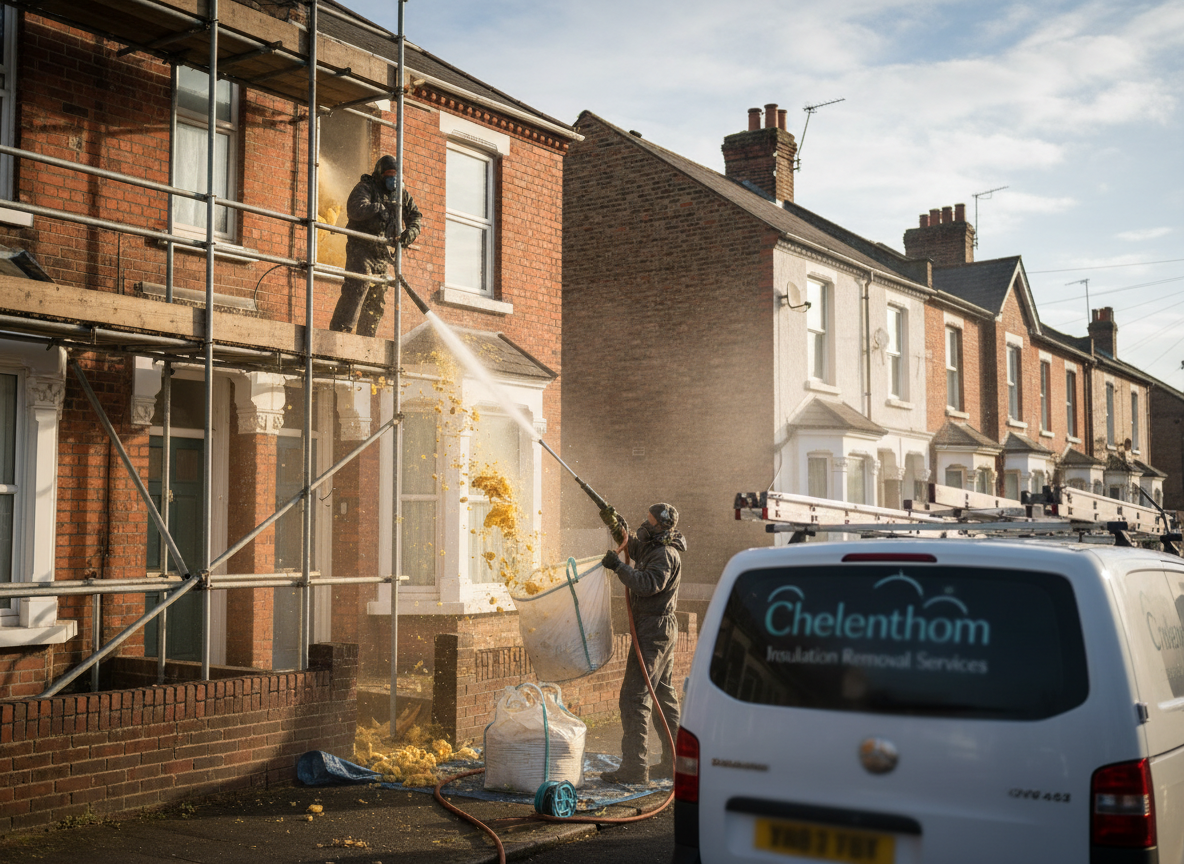
Cavity wall spray foam installed in Cheltenham properties from the 1970s onward often traps moisture against brickwork in Gloucestershire's damp winters. Removal requires cutting access points through external walls, extracting the foam without damaging the cavity ties, and clearing residue that has bonded to mortar joints. Older terraces around the town centre frequently have narrow cavities that demand hand tools rather than mechanical extraction to avoid cracking the stone or brick facing typical of the area.
Homeowners in Cheltenham often discover the foam has absorbed water during heavy autumn rainfall, leading to internal damp patches on gable ends. The process starts with moisture mapping to identify saturated sections before any foam is disturbed, preventing spores from spreading into living spaces. Local soil conditions with clay subsoil mean poor drainage around foundations, so crews must also check that removed material has not blocked weep holes that allow water to escape the cavity.
Regulatory notes for Cheltenham jobs include ensuring the property remains weathertight overnight when partial sections are opened, especially during the wetter months when sudden showers are common. Edge cases include foam that has expanded into roof voids or around window frames in Victorian terraces near the High Street, requiring additional internal access points. All debris is bagged on site and removed the same day to avoid leaving material that could affect neighbouring properties along shared walls.
Technician insight
In Cheltenham, the thing that catches most people out with Cavity wall spray foam removal is how the clay soil around foundations keeps the base of the cavity wet for months after rain, so foam at the bottom stays saturated and pulls away in heavy clumps that can block the remaining weep holes if you don't clear them straight away.
Terrace damp issue near town centre
Homeowner in a 1930s Cheltenham terrace noticed persistent damp on the side wall after heavy winter rain. Inspection showed spray foam blocking weep holes at the base of the cavity. We created small external access points, extracted the saturated foam in sections, cleared the blocked weep holes and left the cavity open to dry. The wall dried out over the following weeks with no further internal moisture.
How it works
- 1
Site Assessment
Inspect cavity condition, moisture levels and access points in Cheltenham properties.
- 2
Access Creation
Cut controlled openings through external walls to reach the foam without structural damage.
- 3
Foam Extraction
Remove spray foam using manual and vacuum methods suited to local cavity widths.
- 4
Cavity Clearance and Drying
Clear residue, check weep holes and allow walls to dry before any reinstatement.
- 5
Final Inspection
Verify cavity is clear and property is weathertight before leaving site.
Pricing
Costs depend on property age, cavity access difficulty and foam saturation levels; upfront quotes provided after inspection.